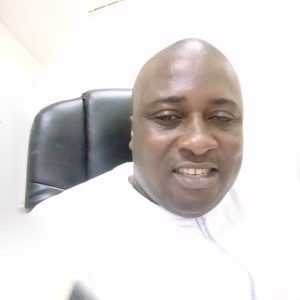

By Terhemba Shija
I do not know whether I have the locus standi to write about bereavements in other families. But I take the liberty of the fact that the late Senate President, Dr Joseph Wayas was a former public officer so his death and burial should attract public interest.
Dr Wayas who died on 30th of November 2021 at the age of 80 in a London hospital, was the third in the line of succession during the Shehu Shagari era (1979-1983). I am particularly interested in the matter because my homeland of Mbaduku shares borders with his constituency, Obudu. My people have also been beneficiaries of his constituency projects especially the Federal College of Education Obudu located at the borders of the two communities.
I plead that someone should be kind enough to provide a grave for the remains of this enigmatic politician to rest in peace. He was a great man of “our heroes past” category who deserves to be honoured even by either a state or national burial.
I have often wondered where the souls or spirits of humans go when they die. Do they automatically leave for heaven or hell or do they hang around somewhere in the biosphere waiting to see how their kinsmen and kinswomen would handle them or matters of their legacy?
Did I hear someone talk about a place called purgatory, a waiting room where penitent souls habitate in readiness for judgment at the end of our civilization? These questions should also hunt those kinsmen of Senator Wayas who appear either reluctant or unable to commit his body to mother earth after three years of death.
So far, no scripture or prophet has been able to explain this afterlife phenomenon convincingly, so I imagine that God intends to keep this mystery to Himself until we individually encounter it. What is however not a secret is the fact that we all die, willy-nilly, sooner or later.
But even at that, death has its own inexplicable mystery. We die at varying ages and of various causes. We die as individuals on sick beds or in groups as in plane crashes or bomb blasts; we die as saints coming out of worship centres or as criminals executed in a capital offence; we die in the loneliness of our cosy living rooms or in the stampede of a surging crowds; we die because we are very poor or we die because we are very wealthy; we die of natural disasters or in man-made disasters. In short, it is futile to grapple with the contradictions of this magnitude.
What then is the use worrying over something we cannot understand, let alone control? Death is such a calous and malicious visitor. It comes when we are least prepared. We are taken aback even at the death very old people. We instantly feel their loss. Compassion and grief are triggered spontaneously at the stroke of death.
But these emotions generated at the stroke of tragedy, dissipate sooner than we expect. We shed tears, we mourn, we sing dirges, we adorn costumes, we comfort one another, we reinforce our faith in God. All these culminate to the solemn occasion of funeral and burial, which act as a catharsis of sort.
It is therefore unfair for anyone to deliberately deny the late Senator Joe Wayas a funeral or burial at the peak time of empathy.
The dead are sent off in a solemn and respectful manner, when the living readily recall their good deeds. Their sins are instantly forgiven and their words modified in the guts of the living.
At a burial, nobody doubts the sure candidacy of the dead for heaven. The mortuary should not be allowed to unnecessarily delay the smooth journey of the pilgrim to paradise. The dead must rest in peace as and when due according to religious or traditional rites.
Senator Joseph Wayas has finished his earthly journey almost three years ago. He deserves a little portion of land for a grave in the hilly countryside of Obudu to rest his bones. It is unfair to keep his corpse endlessly in a morgue as if he had nobody to mourn him.
We feel distraught, not necessarily because Senator Wayas has died, but our tears were long drained with the passage of time, so we may not mourn him with deep empathy. Burying him after three years is therefore practically a reversal of sympathy for his demise. It becomes a mere celebration of the rite of passage.
Adieu, Great Senator, May your soul rest in peace.
Terhemba Shija is a Professor at Nasarawa State University, Keffi.